Beyond the building: the sustainability story behind our profiles
When people think about sustainability in windows and doors, they tend to think about what happens inside the building: the thermal performance, the energy savings, the reduced heating loads over decades of use. That matters, and it's something we spend considerable effort on. But it doesn't tell the whole story. A building product has a life that begins long before installation and continues long after.
It starts with the metal itself
Aluminium has a complicated relationship with carbon. Producing it from scratch is enormously energy-intensive: smelting alumina into metal requires sustained, high-temperature electrolysis, and the carbon footprint of that process depends almost entirely on the electricity source powering it. Aluminium smelted from coal-fired grids carries a very different embodied carbon story to aluminium smelted from renewables.
This is where New Zealand has a genuine advantage, and where our supply chain makes a meaningful difference. The aluminium billet used in our profiles is sourced from the New Zealand Aluminium Smelter at Tiwai Point, which is powered predominantly by hydro-generated electricity. That means the primary metal going into our window and door profiles carries one of the lower carbon footprints of any commercially available aluminium in the world. It's not a marketing claim: it's a function of geography and infrastructure that we've deliberately chosen to make the most of.
We work with INEX (Independent Extrusions Ltd), our Hamilton-based joint venture partner, to extrude that billet into the profiles that form the structural backbone of our window and door systems. INEX published its first comprehensive sustainability report in 2025, and the picture it presents of our shared supply chain is one we're proud to be part of.
What happens to scrap
One of the most important sustainability credentials of aluminium as a material is its recyclability. Unlike many building materials, aluminium can be recycled indefinitely without loss of quality, and recycling it requires roughly 95% less energy than producing it from scratch.
In practice, some scrap is unavoidable in any extrusion operation: offcuts, surplus material, the remnants of each billet run. The question is what happens to it. At INEX, the answer is straightforward: none of it goes to landfill. In 2025, INEX recycled 2,765 tonnes of aluminium scrap, with around 90% going directly back to Tiwai Point for reprocessing into new billet. That material re-enters the production cycle and, in time, comes back to us as profiles again.
The result is that the aluminium in FMIBI's windows and doors is, in part, already recycled material. And because it returns to a hydro-powered smelter rather than a coal-powered one, that recycled content retains its low-carbon advantage.
Our own operation: investing in better
Understanding the sustainability of our supply chain is important. But it's only part of the picture. The question we've been asking ourselves more seriously in recent years is what we're doing within our own walls.
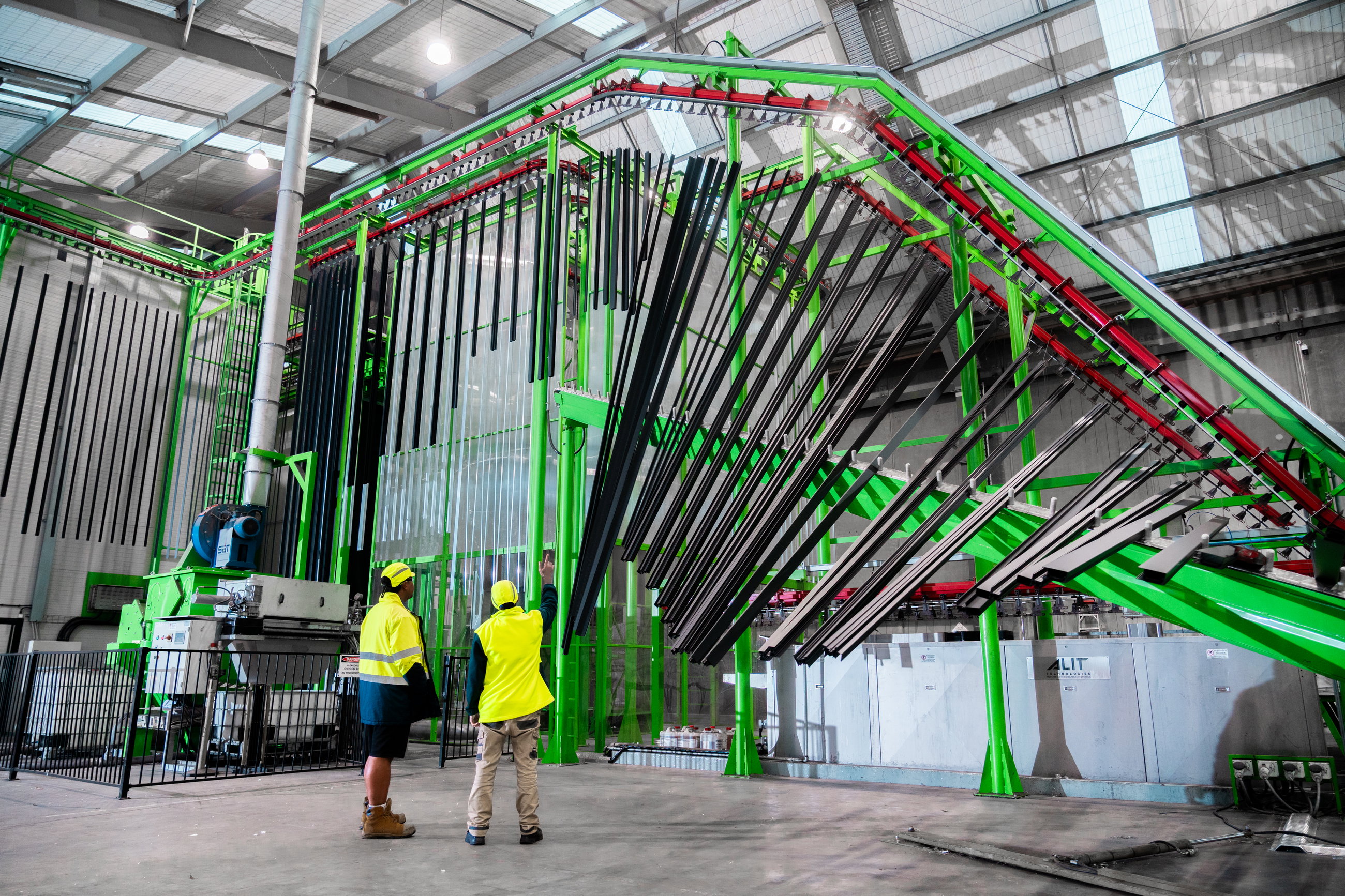
Our powder coating operation is a good example of where that thinking shows up in practice. Powder coating is the process that gives aluminium profiles their colour and surface finish, and it's a step we carry out ourselves as part of producing finished joinery. The way we run that process reflects the same resource-conscious approach we expect from our supply partners.
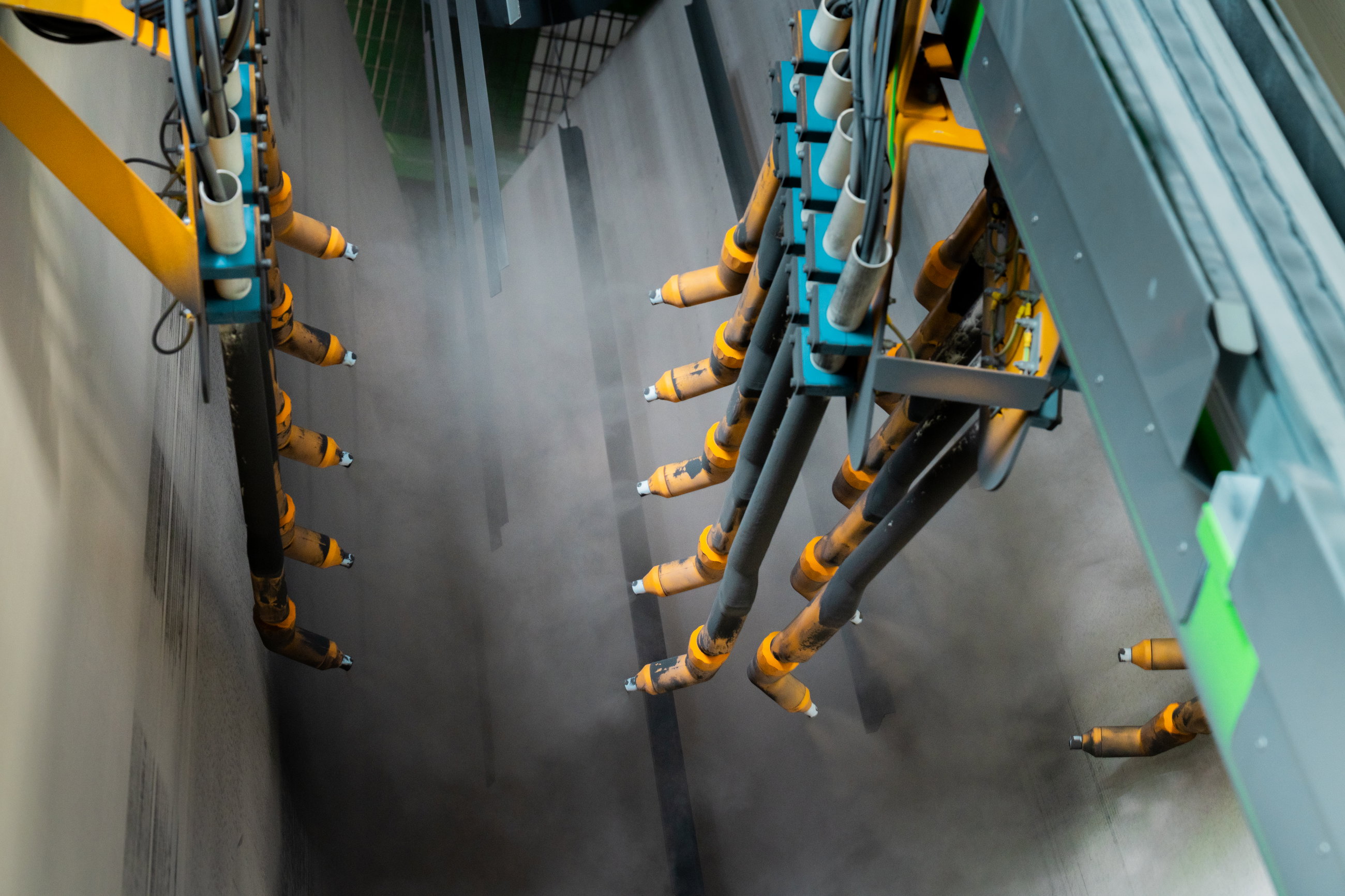
Our coating line uses less power than conventional equivalents. It recycles the powder that doesn't adhere to profiles during coating, recovering material that would otherwise be wasted. And it recycles the water used in the process. Taken together, these aren't just efficiency gains: they're a meaningful reduction in the resource intensity of our manufacturing, and a demonstration that sustainability improvements in our own operation don't have to wait for the supply chain to lead the way.
Our powder coating line recycles water and unused powder.
The broader supply chain picture
Beyond the hydro-powered smelting and the recycling loop, INEX manages its aluminium sourcing against the Aluminium Stewardship Initiative (ASI) framework - the first aluminium extruder in New Zealand to do so, and every smelter in their supply chain holds current ASI certification.
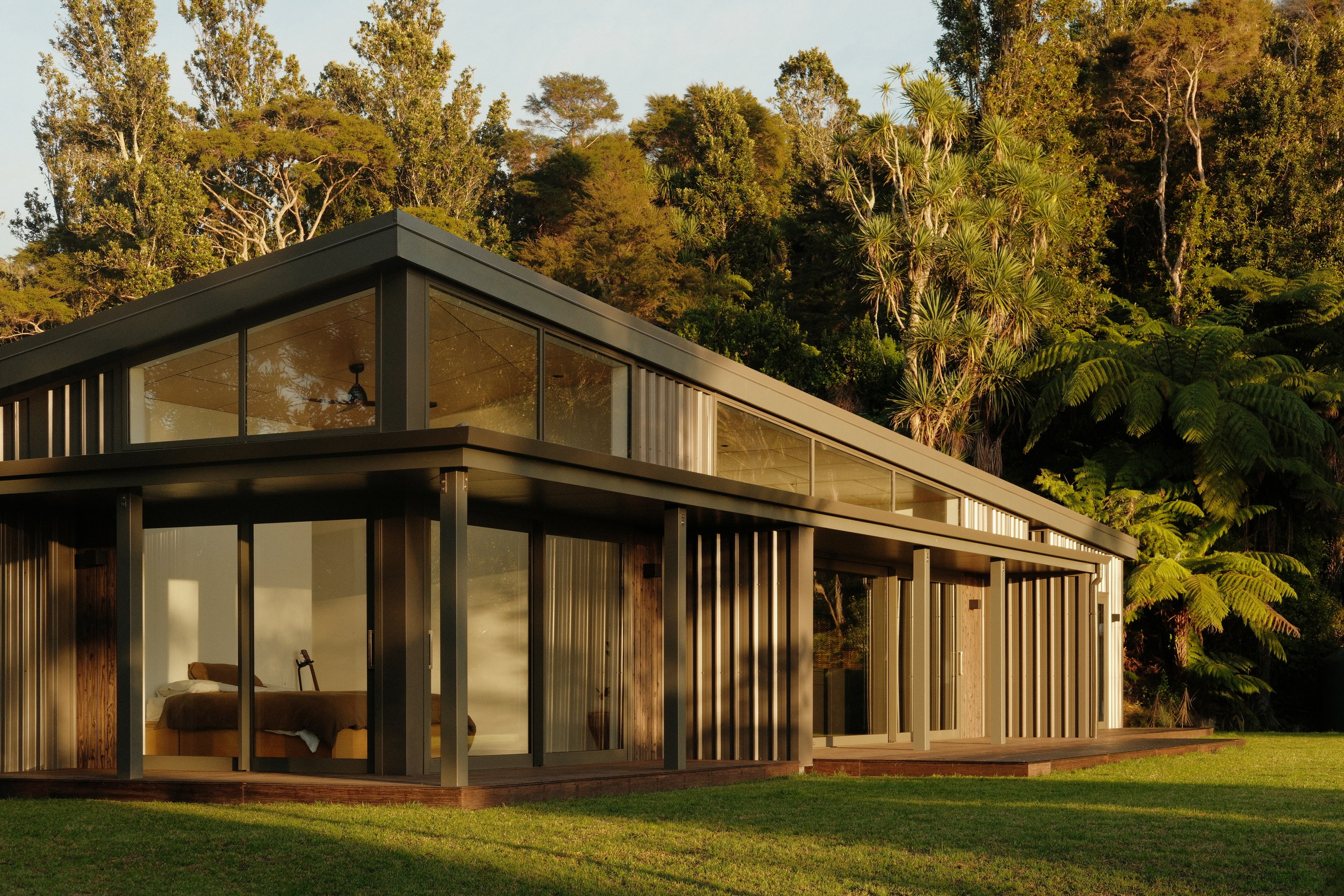
For FMIBI, this matters because the credentials of our supply chain are part of the credentials of our products. When a specifier or homeowner asks what's in a Fairview window frame, and NEXT door, or a Eurowood weatherboard, the answer runs from the smelter through INEX's extrusion process to our own coating and fabrication, and ultimately to the building.
On emissions, INEX reports annually against recognised international standards and has established a formal greenhouse gas baseline with a long-term net zero target across all emission scopes by 2050. Their modelling confirms they remain on track to meet interim targets.
What this means when you specify our products
New Zealand is at an early stage of integrating embodied carbon into procurement decisions. Environmental Product Declarations (the documents that allow like-for-like comparison of building materials' carbon footprints) are becoming more common, and we are actively working towards EPDs for our aluminium profiles. The groundwork we've laid in understanding our supply chain, and the work INEX has done in establishing their sustainability baseline and reporting, feeds directly into that.
When those EPDs are complete, specifiers will have verified data to support lower-embodied-carbon design decisions. But the underlying reality they'll document isn't new. It's the result of sourcing choices, recycling systems, and manufacturing investments that we've been building for years.
Glass recycling: closing the loop on another material
Aluminium profiles are our biggest product category, but they're not the only place where we're working to reduce waste. Glass is a significant material across our operation, and we take the same circular approach to it.
We work with 5R Solutions to recycle glass waste from our manufacturing process, across all four glass types we handle: LAM, double glazed units, float, and offcut glass. This year to date, we've recycled 759 tonnes of glass across our Auckland and Christchurch operations, with only 24 tonnes going to landfill. That's less than 0.04% of our glass waste ending up in the ground.
"This year to date, we've recycled 759 tonnes of glass across our Auckland and Christchurch operations"
Environmental management: building the framework
Alongside the specific recycling programmes and supply chain work, we're also formalising how we manage our environmental responsibilities as a business. We're currently working towards Toitū Enviromark certification, an independently audited environmental management programme that will give our approach to energy use, waste, and emissions a structured, credible framework. It's a commitment to doing this properly, not just doing it.
The bigger picture
Our sustainability strategy is still developing. We've invested heavily in the future, in our FMIBI ZERO research, in product performance, in understanding what buildings need to do differently over the coming decades. Investments like the new coating line are part of that shift.
We don't think sustainability is a final destination you arrive at. It's something you keep working towards, through sourcing decisions, manufacturing investments, honest reporting, and a willingness to keep asking the question.
It's a commitment to making products we can stand behind, from the smelter to the finished frame.
To read more about FMIBI's building systems, click here.